Take a look at the changes we've made to our privacy policy effective May 25, 2018. By continuing on this site you agree to the terms stated in this policy
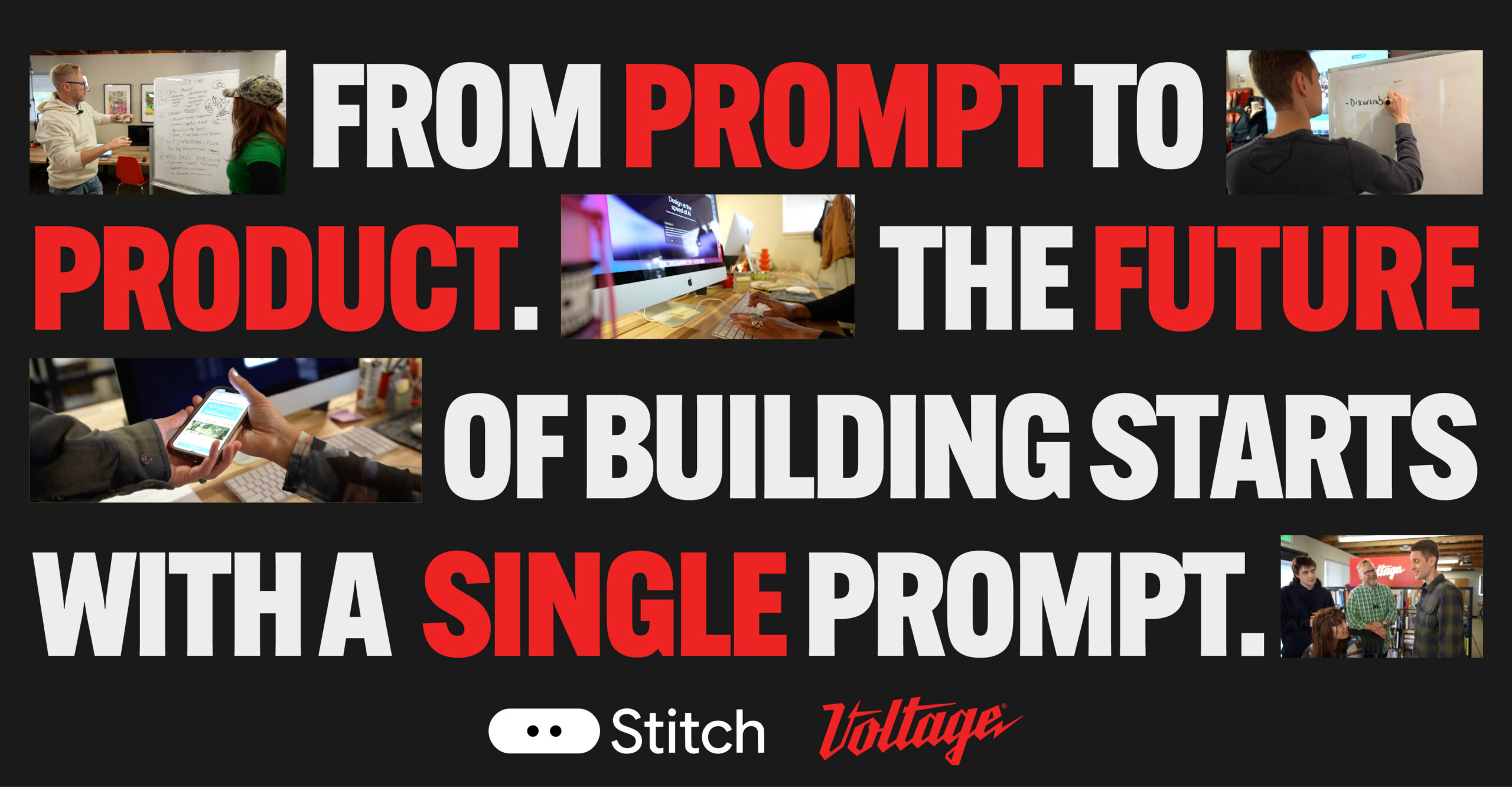
The more AI can make, the more creative minds are needed.
AI gives you infinite possibilities, which sounds great… and can be like crack cocaine to ADHD poster children like ourselves, until you realize someone still has to call the shots on what’s actually great and when to stop, because AI can’t replace creativity. That was our biggest takeaway after partnering with Google to test Stitch,…
AI gives you infinite possibilities, which sounds great… and can be like crack cocaine to ADHD poster children like ourselves, until you realize someone still has to call the shots on what’s actually great and when to stop, because AI can’t replace creativity.
That was our biggest takeaway after partnering with Google to test Stitch, their AI design tool for rapidly prototyping UX, app, and web interfaces. We went in curious and came out convinced that Stitch can change the creative process in a big way, (and it’s documented it all in this clip) YAY…
But maybe not in the way everyone keeps yelling about on social media.
Google approached us about using Stitch on a project to document how it would work with a focused design team.
Not a fake project, but something real. I knew exactly what client and project this could make sense for: Force 4 Good Fundraising.
At VOLTAGE, we believe design and creativity can be a powerful force for good, and even launched a company called Force4Good fundraising which helps restaurants, nonprofits, schools, teams, churches, and local communities run fundraisers easily and with greater impact.
Force 4 Good had already streamlined the backend for running local fundraisers. The next opportunity was creating an app that made it easy for the community to find, support, and share those fundraisers.
We knew a community app could do this and dramatically amplify the reach of Force4Good and the causes it supports.We also knew we didn’t have endless time or budget to go chase it down the typical way.
Apps and technical projects have been and still are lengthy endeavors in many ways. Testing, prototyping, coding, starting over when it doesn’t quite work right like you thought it would. This was always time and cost intensive…
So Stitch felt like the perfect opportunity to test this idea with Steven, the CEO of Force 4 Good and with minimal risk.
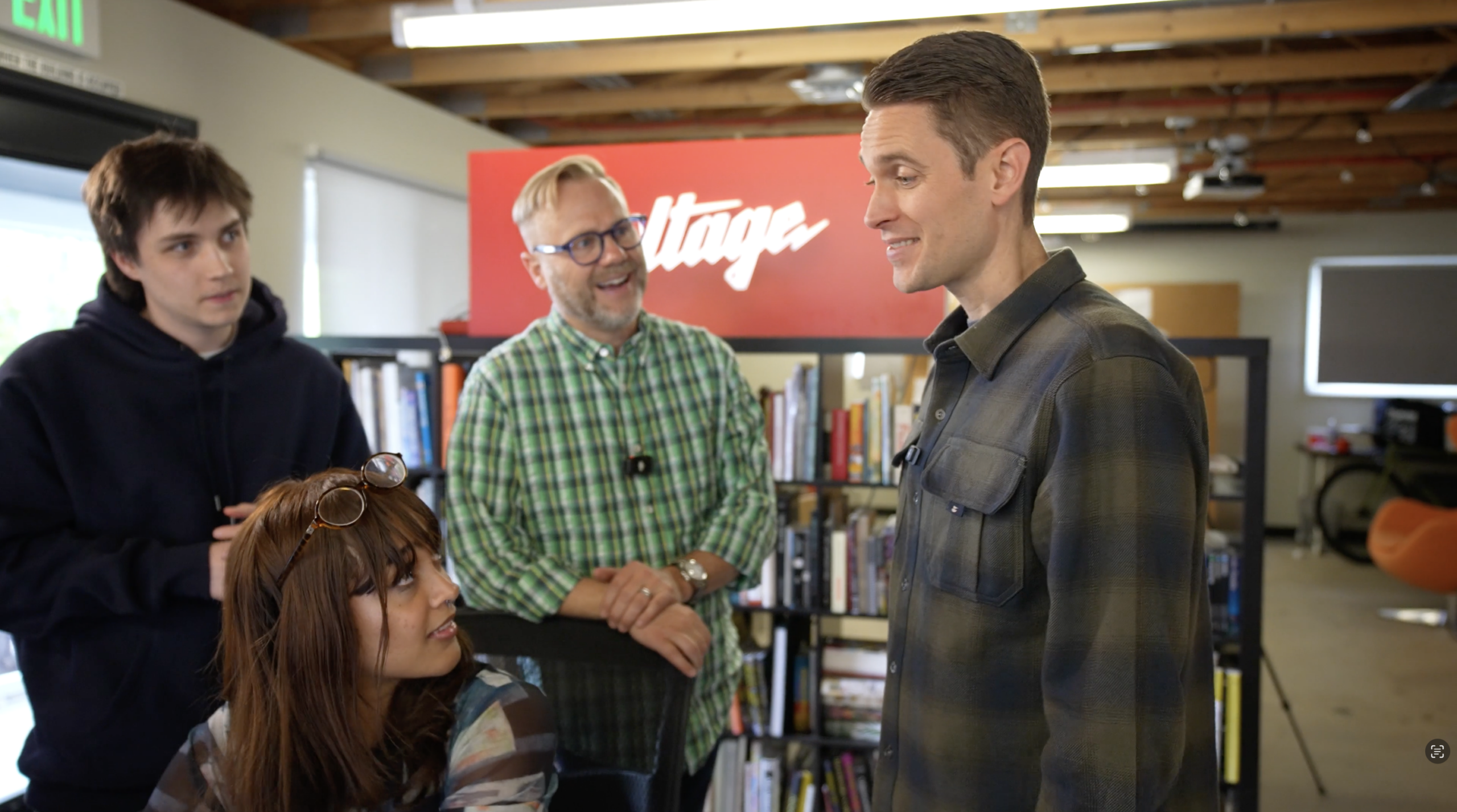
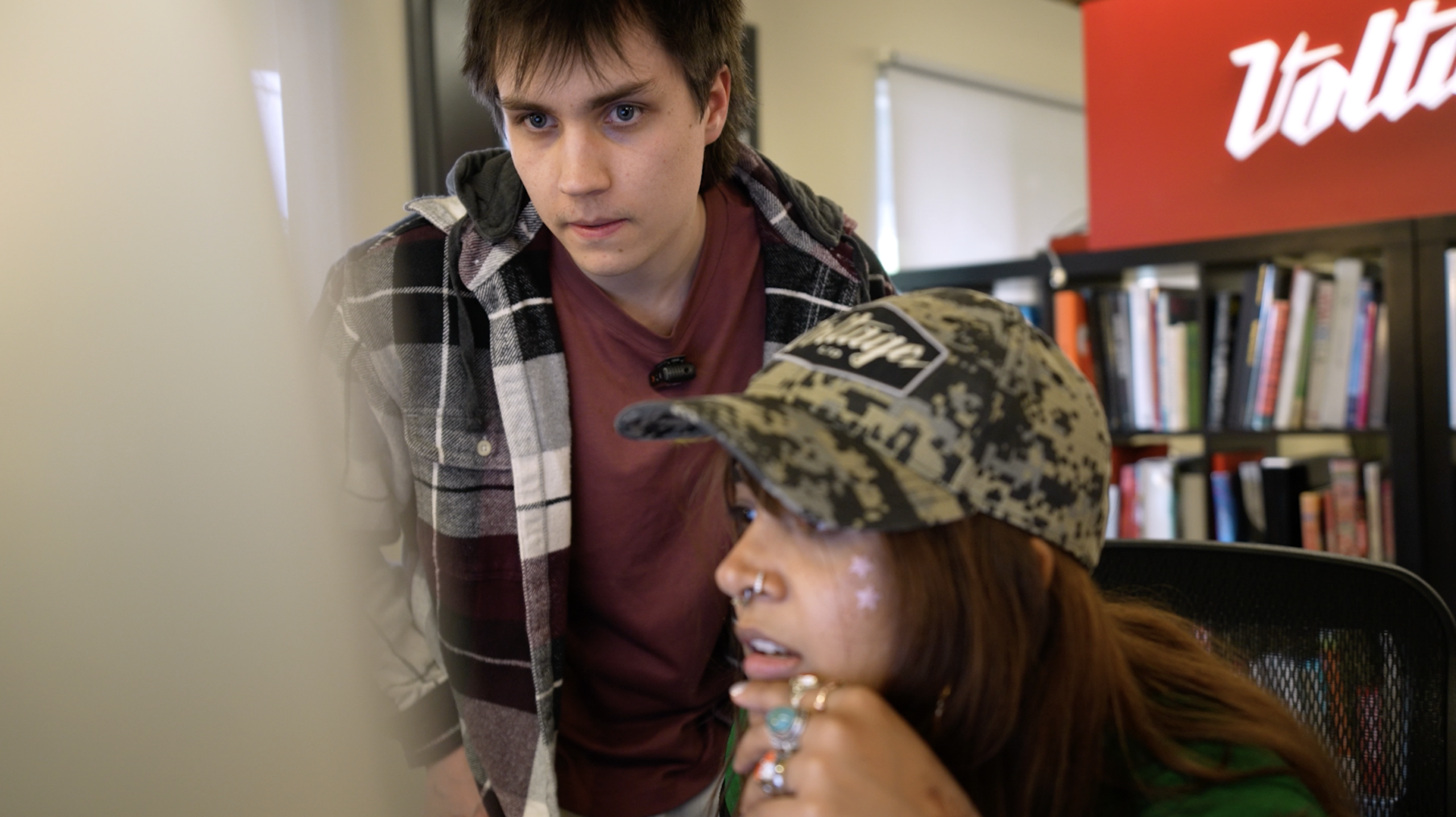
With Jared Shores and CRUX Media hoping on board to help us document this process, and Ronny Northrop giving us some creative direction, we went to work building the app concept and capturing the process as we made it.
This was real.
No fake client.
No stock imagery
No actors!!! Or Director telling us what to say… just us trying to get comfortable with a friend following us around with a camera in our face.
We started the process using Stitch, with very little exposure beforehand.
The project began the way we would start any project: with the client.
We sat down with Steven to gather as much data as we could about the goals, features, users, and overall vision for the app experience. What did the app need to do? Who was it for? Why were we building it and what should it feel like? How could it make fundraising the easiest thing to do for a our user persona: a very busy PTA president who has 30 min to schedule 12 fundraisers before they are off to pick up kids and be the CEO of a busy growing family.
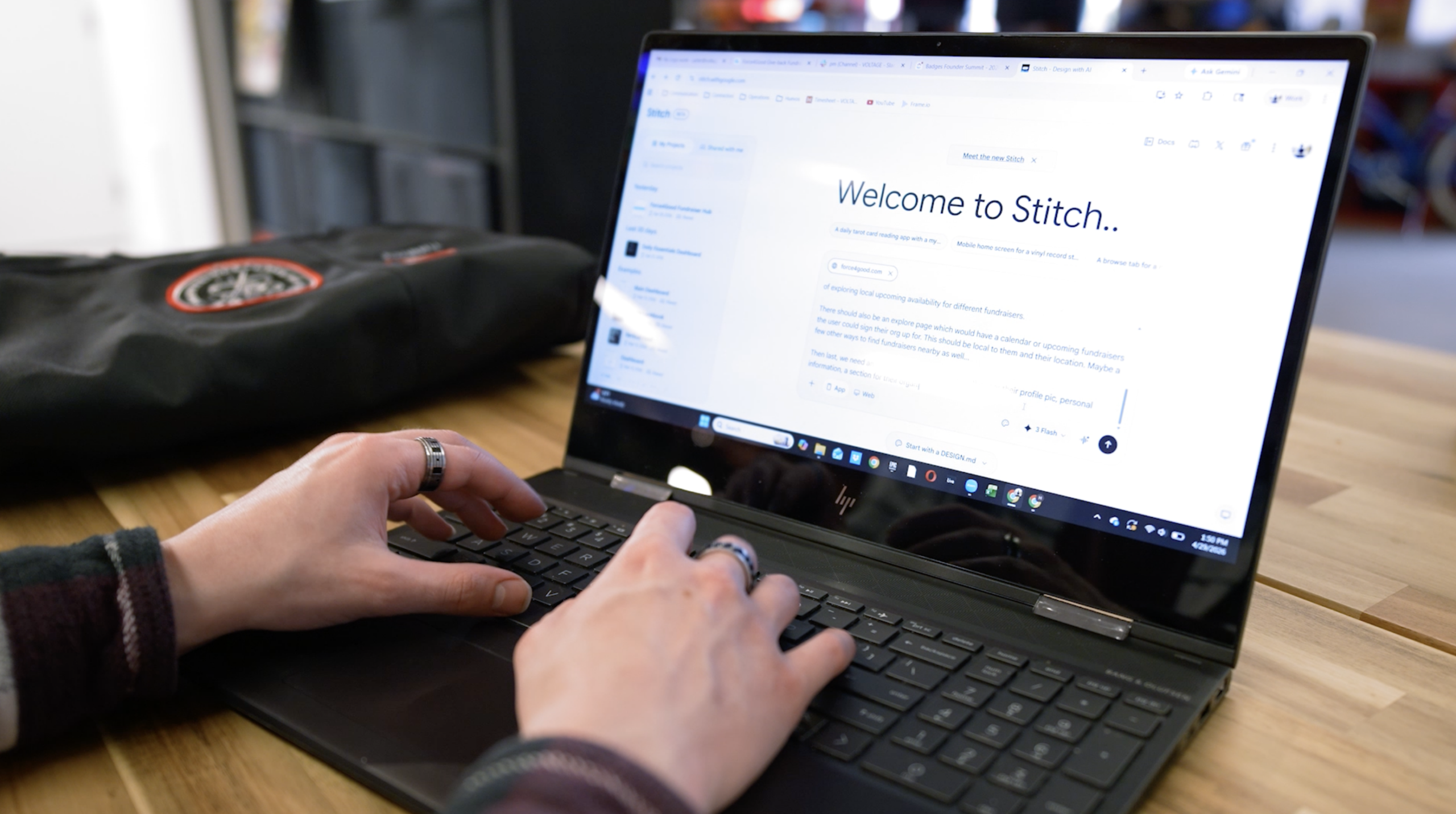
We started prompting.
And prompting.
And prompting some more.
We uploaded brand guides. We fed Stitch the full notes from our meeting. We gave it all kinds of data to chew on to see what it would do. Even a beautifully crafted creative brief sandwich with goals, objectives, and vision that looked so yummy to a design team. We also tried more emotional prompts. Simple one-sentence versions to leave things ‘open’ for interpretation. I even asked Stitch to write me a Tony Award-winning play as an app. That one shut it down.. and I was denied any future hopes of a broadway show.
Nice job, Stitch. You weren’t fooled by my creative shenanigans.
And so we quickly found that the more detailed inputs gave us the strongest results.
The better the brief, the closer we got to things we liked, and things we loved.
The tricky part was getting all the things we loved into one final cohesive comp.
But like most AI tools right now, the work still needed a lot of human judgment and design jiggering.
Stitch gave us strong UX treatments, interesting components, useful directions, and a much faster way to explore possibilities. But getting everything to land together in one final design was still the tricky part.
That’s where the creative process kicked back in.
We took the best pieces from different iterations and printed them all and brought them to the office cork boards to literally cut and “stitch” our fav pieces together, into the perfect design solution. This also helped us envision different user flows, and cut what wasn’t needed, or made the app less focused.
And it’s always fun to work with your hands… and scissors! We love scissors.
If we had an extra day we would have called in our friend Deborah who had been a PTA president for years to actual ly do some quick user tests for feedback.
But what we loved about Stitch was the way it could build from a brand guide and keep that guide connected to the iterations. It was still minimal, but it gave the process a sense of structure we haven’t seen in other AI design tools.
What we also discovered is that endless iteration is both a gift and a trap.
We could have kept prompting until our fingers turned blue. Stitch would have kept giving us more options, more screens, more directions, more “almost there” ideas.
But more is not the same as better, or best.
At some point, someone has to make the call.
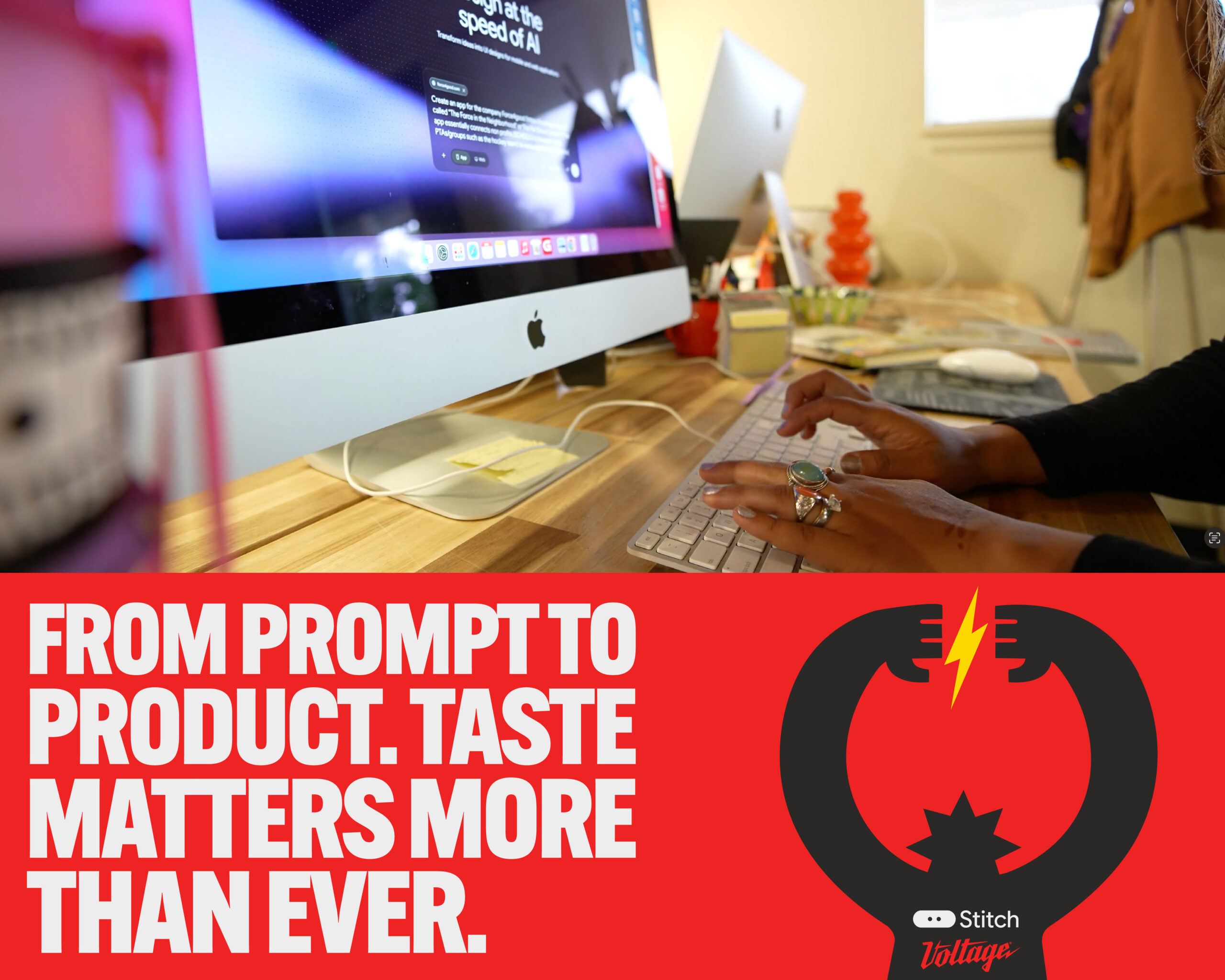
That’s why taste matters more than ever.
Stitch helped us get off the ground at magic-wand speed. It helped us explore faster, generate more directions, and move a good percentage of the way toward a working prototype. It also made it easier to export the work into formats we could keep refining and designing in other tools we’ve already mastered. So kudos to the Stitch team for this… We loved the export abilities..
The final leap still required talented designers.
The creative eye. UX experience. Brand judgment.
And knowing what to keep, what to cut, and what needed to be pushed further.
After actually ‘stitching’ together the pieces we liked on the cork boards — we went back to our computers and had a working prototype in an afternoon.
In our old school process this might have taken a good week to iterate UX designs and user flow. Then several more days refining the best path forward before having amything close to a working prototype.
This compressed that process dramatically.
But it did not eliminate the need for taste.
It made taste and design discernment more important than ever.
That’s the thing people miss when they talk about AI replacing creative work. The more AI can generate, the more valuable it becomes to know what is actually good.
AI gives you infinite possibilities. It’s like letting our ADHD brains explode all in seconds, and that is exciting, but it can also be exhausting, and distracting, and lead you down the wrong path if you don’t have the clear creative vision and experience to wrangle that wild animal of unrestrained imagination!
Ultimately these tools are not here to help make more mediocre slop, but to push things further, innovate, and create something new. And that’s the part we’ll always be responsible for.
So beware Mr. CEO if you’ve drunk the AI Kool-Aid and and cut your whole creative staff …. It may come back to bite you. Because if you don’t value human capital today, you’re doomed, because AI can’t replace creativity. As with everything, if anyone can do it, they will, and everyone’s creative will suck. So keep the real creative minds close because that’s what will differentiate you from the rest of your competitors who may chase the perceived dollar savings over real people with talent.
In the right hands, Stitch helped us move faster, explore more, and build smarter. It gave us a way to do something we couldn’t before because the client didn’t have the time or resources to Test iterate and launch something new.
So remember: Taste matters more than ever. AI can’t replace creativity. Stitch is a good one and we had so much fun working with google to put it to the test!
Thank You Google Stitch Team
Producer: Jared Shores + CRUX media
Creative Advisor: Ronny Northrop
And the stars of the show – the VOLTAGE design team.
Watch the full spot to see how VOLTAGE partnered with Google Stitch to take Force 4 Good from idea to app prototype in a day. And if you need a creative partner to launch something innovative, reach out HERE
Words By Eric Fowles
Be a FORCE FOR GOOD
VOLTAGE is a creative agency specializing in giving your business a leg up in a performance driven world. Through brand design, creative strategy, and execution, we can drive results for your marketing.
How can beauty brands win over coveted Gen Z consumers? Step into the mind of a Gen Zer and pick up some strategies for connecting with this influential, values-driven generation – beyond relying on viral trends.
How can beauty brands win over coveted Gen Z consumers? Step into the mind of a Gen Zer and pick up some strategies for connecting with this influential, values-driven generation – beyond relying on viral trends.